The Praktica DIGI 3 LM
Some month ago, me and my father were asked to go and fetch a lot of camera accessories around Apeldoorn for a neighbour who, at that time, was located at the other side of the globe. Somewhat begrudgingly but with the prospect of good wine and cheese as a reward, we set off to fetch this auction lot. The somewhat rinky-dink car we drove there was plenty spacious, until we saw the size of the lot.
Lamps, stands, tripods, joysticks, cables, paper, mouse mats and photo printing paper. It was a miracle that the boxes - old mail boxes from the Deutsche Post were telescopic and could be crammed fairly efficiently into the van. I have no idea who needs 200 blank mousepads, but everything has its price I guess.
The final thing we loaded into the car were a dozen cameras - mainly returns or surplus. Nearly all of the cameras were B-tier brands and a few more well known brands like Kodak and Sony. Too bad the Kodak box was empty - which we discovered upon our return - and the Sony was broken. Two cameras in the lot were Praktica cameras; a brand well-known for their analog cameras which were produced in East Germany by Pentacon. After the analog camera domination had ended, Pentacon still produced (and produces!) some digital cameras. Not very good ones, mind you.
I should have known that, upon throwing the name of the camera in three search engines, finding only two results, I had a truly “unique” camera on my hands. I present to you, the Praktica DIGI 3 LM.
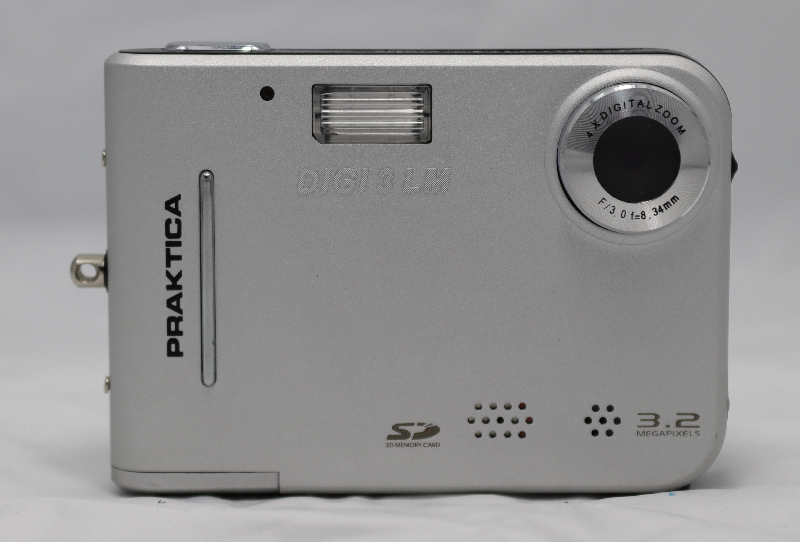 The Praktica DIGI 3 LM
Some specs of specs
I could find very little information about this camera - only two pages had specifications and one had a picture. Considering the numbers, this is a relatively rare camera. Let’s see:
- Release date: November 2005
- Sensor: 2048x1536 (interpolated to 2400x1800) 3.2 MP 6.4x4.8 mm CMOS
- Lens: fixed focal length of f=8.34 mm (80 mm for 35 mm equivalent) (a crop factor of nearly 10x!)
- Aperture: F/3
- No optical zoom, just a digital 4x zoom
- Screen: 2” LTPS LCD
- Storage: 16 MB internally but takes an SD card (not SDHC, not SDXC) in a slot at the bottom
- Power: 2 AAA 1.5 V batteries
- Shutter: no half press
- Shutter speed: no clue
- Shutter delay: about a week (I have taken many pictures of my feet this way)
- ISO: 0 (according to the EXIF)
- Autofocus: a mystery
- Flash: next to none
- White balance: auto, daylight, cloudy, tunsten (sic) and fluorescent
- Photo resolutions: L (2400x1800), M (2048x1536) and S (1600x1200)
- Video resolutions: VGA (640x480) at 20 fps and QVGA (320x240) at 30 fps
- Ports
- A/V out
- Mini-USB 1.1
The camera feels like it will fall apart every time I turn it on - it is awful. The shell is poorly constructed, the hinges are very weak, sharp edges everywhere and when I tipped it over whilst taking its photos, it just fell apart:
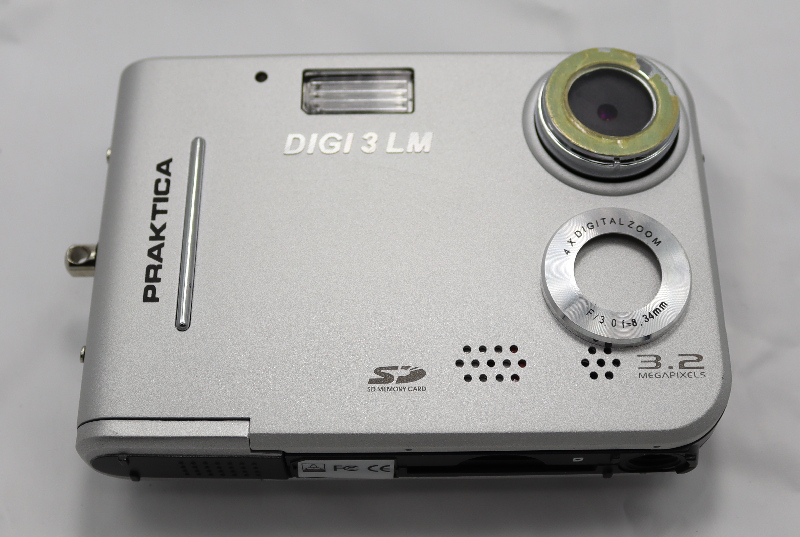 We will all succumb to entropy.
Some careful drops of glue fixed it right up.
Even the controls are terrible: mushy, wobbly buttons that control an awful menu and a shutter that doesn’t even have a half-press function for things like autofocus or automatic exposure lock. Also, no, you’re not imagining things:
 The unmistakable hallmark of DDR legacy.
The lens is off-center from its enclosure.
Colors
I am fairly new to color calibration, but I bought a cheap expired Colorchecker to do some rudimentary calibration with. Color representation is, so to say, not great:
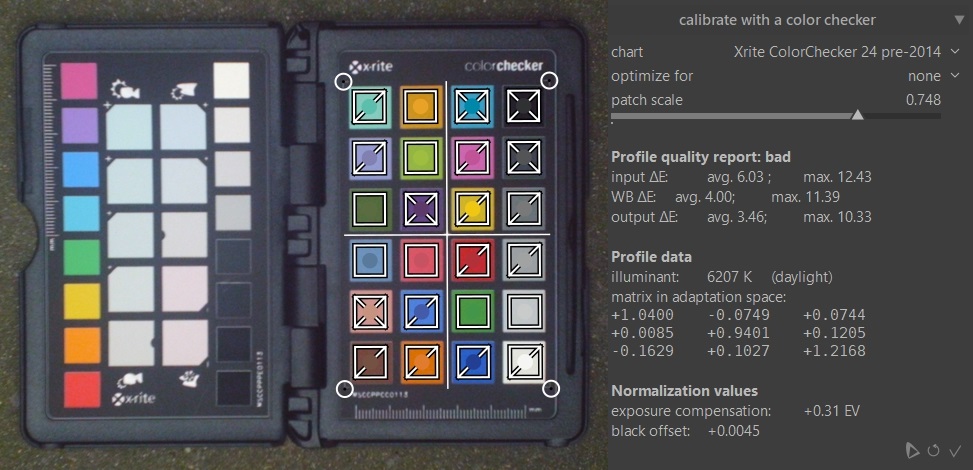 Guide: not crossed: good, singly crossed: mediocre, doubly crossed: bad. Overcast weather, -1 EV.
Greens seem to have be OK, but reds and blues are terrible.
Photos
Taking good photos is tricky; there is no way to manually focus or lock the exposure. For most pictures, you are at the whim of a poorly designed autofocus and auto-exposure. Thank being said, here are some of the more successful pictures I took.
 SOOC. A derelict mall acquired some new graffiti a few days ago.
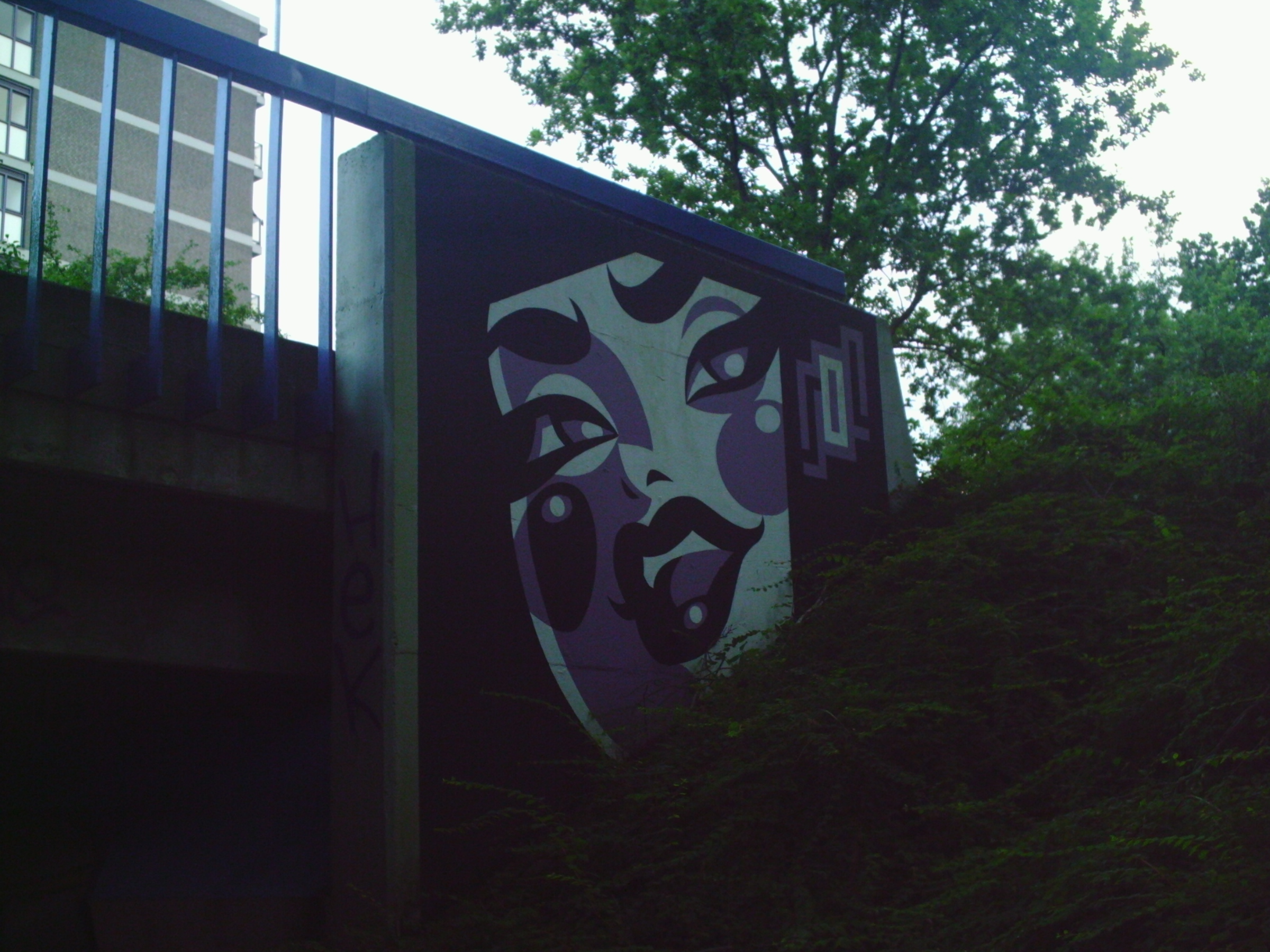 SOOC. Strong incident light causes hazing over the entre image.
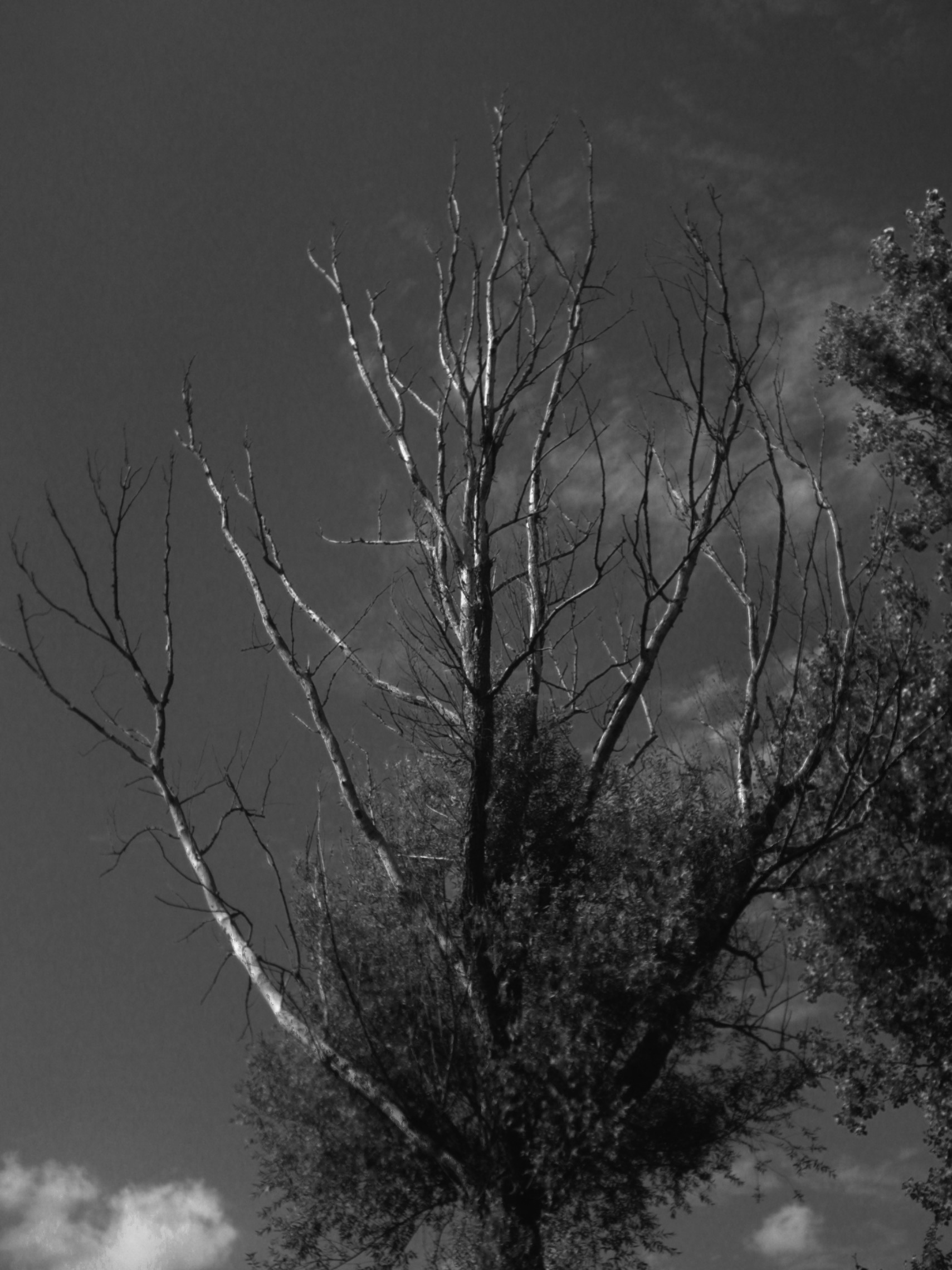 A bare elm tree. Edited in RawTherapee.
 SOOC. From all photographs, this one is probably the sharpest. The hydrangea is a very interesting plant: the color of the flowers depend on the aluminium uptake of the plant, which is a function of the acidity of the soil.
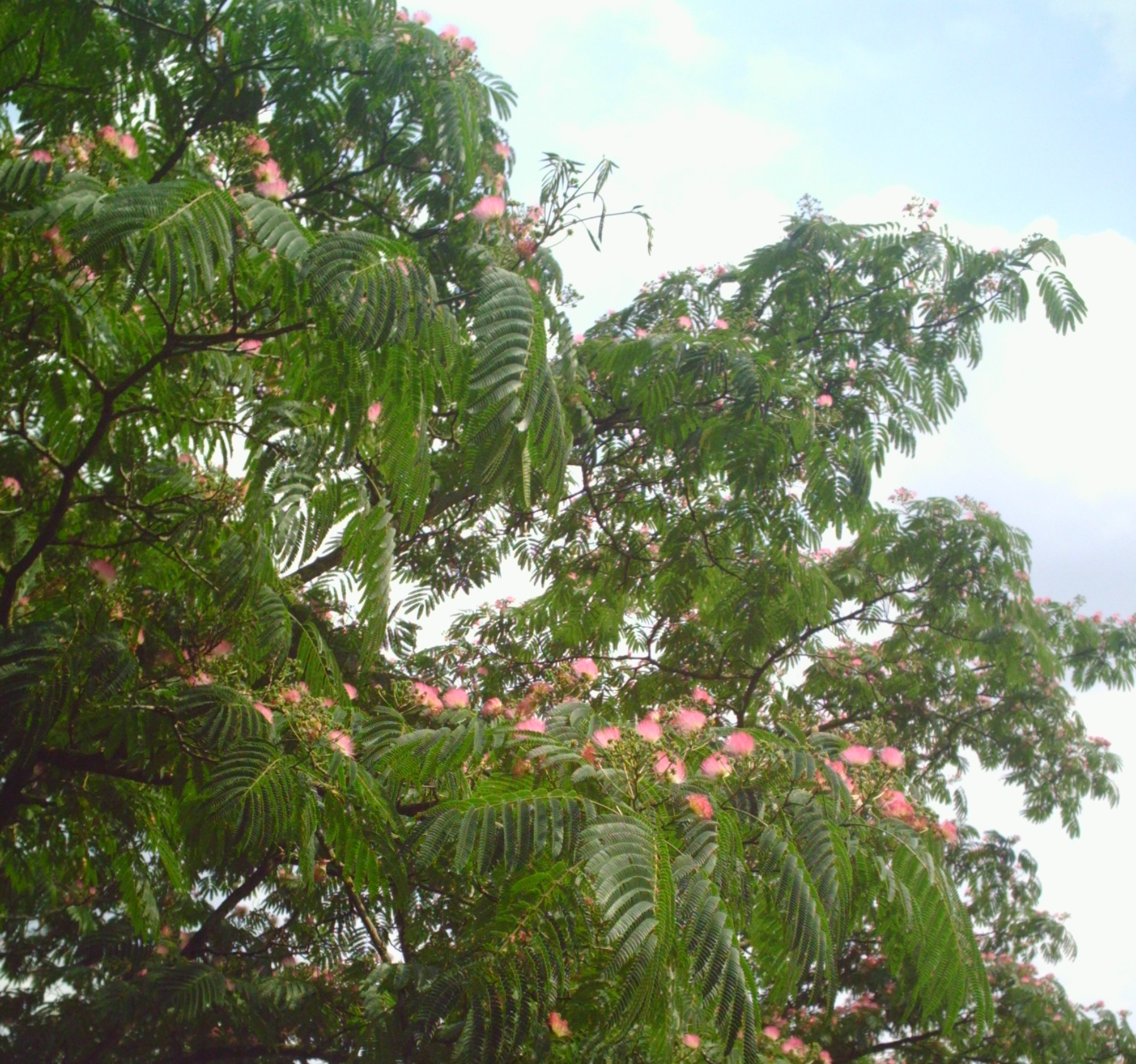 SOOC, cropped. The Persian Silk Tree: unique flowers and leaves.
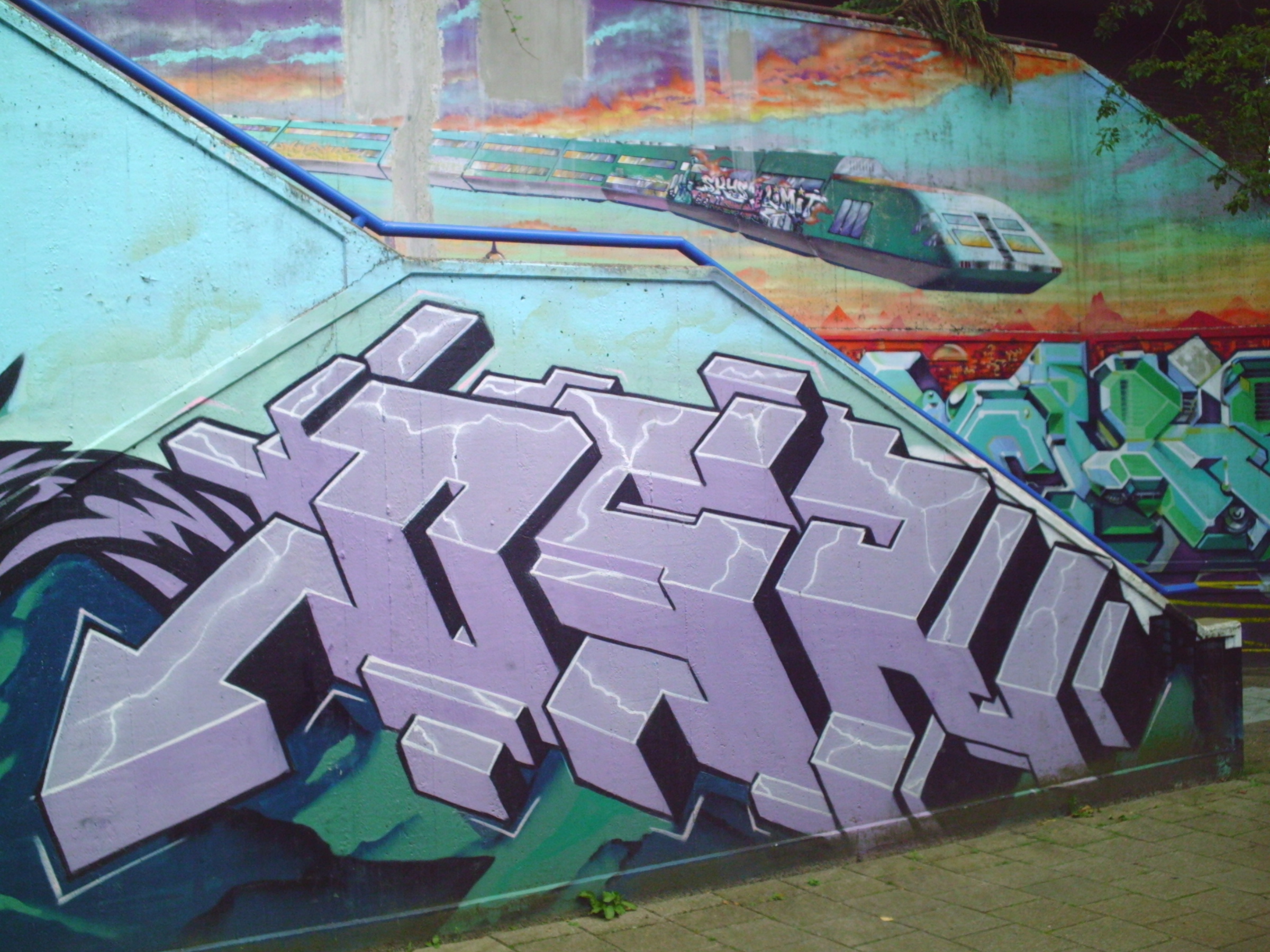 SOOC. Other new tags. The body of the arrow resembles a cubic crystal structure, like halite under a microscope.
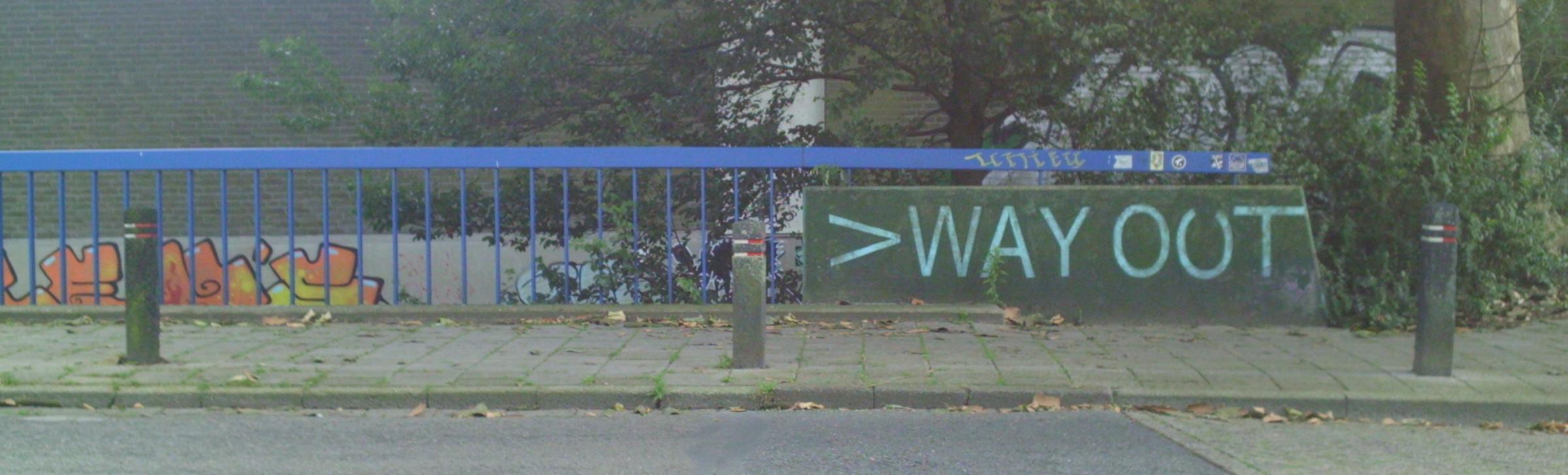 SOOC, cropped. Leave. (Before you notice the significant barrel distortion.)
Trying to get good pictures from a very poor camera can be tricky. Even though “standard” options like proper exposure and focus control were unavailable, the shots that were properly focused and illuminated do have a nice tone, especially when having highly contrasting regions. Too bad it blows out the rest of the image.
Fascinating little camera with little online presence. I did not expect much, and it did not deliver much. Worth your time and money? No. It’s going back to my neighbor.
Final words
Due to an excess of time and a lack of motivation, I decided to contribute some information to a site I like a lot, Camera-wiki. Nearly all of the fairly uncommon cameras I got on loan from this neighbor have been photographed and put online. I will probably put them in the public domain some time in the future, but the folks at this site have been very kind and I thought it was a good idea to try and preserve some of the knowledge, considering the scarcity of these cameras. Go check it out, there’s a lot of information there.